
Industries · Aged Care & Healthcare
Aged Care Equipment
Aged care kitchen equipment for the whole foodservice fit-out — combi ovens and blast chillers for cook-chill production, holding cabinets and meal delivery trolleys, food processors for texture-modified menus, and commercial dishwashers, curated for Australian residential care and healthcare kitchens. Feeding a facility is a different job to running a restaurant: three meals a day, every day of the year, to a fixed resident count with documented temperature control at every step. This range pulls the equipment that job runs on into one place, so you can spec production, meal delivery and wash-up together. It sits alongside our other industry equipment ranges; for the full category depth, browse commercial cooking equipment and commercial refrigeration.
Shop Aged Care Equipment by Category

Combi ovens
Shop the combi ovens range →
Blast chillers
Shop the blast chillers range →
Meal trolleys
Shop the meal trolleys range →
Medical fridges
Shop the medical fridges range →
Dishwashers
Shop the dishwashers range →Who this aged care equipment range is for
This range is built for the kitchens that feed people long-term: residential aged care facilities fitting out a new kitchen or refurbishing a dated one, retirement village and community dining rooms, hospital and healthcare foodservice contractors, central production kitchens cooking for several sites, and community meal programs delivering plated meals off-site. The common thread: a fixed daily meal count, mostly elderly diners, and a food safety program that has to be evidenced — so equipment is chosen for repeatability and temperature control, not à-la-carte flair. If your operation is event-driven rather than facility-based, the catering equipment range covers that trade; venues that pair a care community with bistro-style dining should also look at the club and RSL equipment range.

Eswood
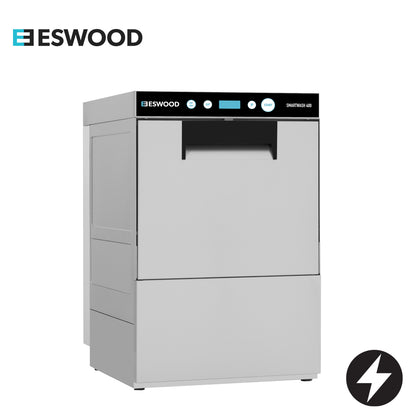
Eswood SW500 Smartwash Undercounter Commercial Dishwasher575 x 605 x 820 mm
$3,600.00 +GST$4,950.00

Washmaster
Washmaster Underbench Commercial Dishwasher WM50U575(W) x 825(H) x 605(D)mm
$4,720.00 +GST$7,583.00

Asber
Asber Tech Line Underbench Glass/Dishwasher - GE-400BDD470(W) x525(D) x720(H) mm
$3,137.00 +GST$3,690.00

Blast Wash
BLAST WASH Underbench Dishwasher - AT50U575(W) x 605(D) x 825(H)mm
$3,800.00 +GST$9,800.00

Blast Wash
Blast Wash Undercounter Glasswasher AT40U438(W) x 535 (D) x 673(H)mm
$2,640.00 +GST$5,300.00

Washmaster
Washmaster Underbench Commercial Glasswash WM40U436(W) x 670(H) x 535(D)mm
$3,430.00 +GST$5,484.00
What an aged care kitchen fit-out covers
Zone by zone — every line links to the matching range so you can build your kit as you read.
Cook-chill production: combi ovens and blast chillers
Most facility kitchens run some version of cook-chill: batch-cook in a combi steam oven, chill rapidly in a blast chiller, store under refrigeration, then retherm at service. The pairing matters because it moves cooked food through the temperature danger zone quickly and gives the kitchen a documented cooling step — the kind of evidence a HACCP-based program is built on. Spec the two as a matched pair: the blast chiller's per-cycle capacity should keep up with what the combi produces per batch, or the chiller becomes the bottleneck at exactly the wrong moment.
Retherm, holding and meal delivery
Getting a hot plate in front of every resident is the part of the trade outsiders underestimate — dining rooms, in-room trays and secure wings can all sit a long corridor away from the kitchen. Holding cabinets keep batch-cooked food at serving temperature without drying it out, heated food warmer carts and trolleys and racks move plated meals to the point of service, and a hot bain marie line serves the main dining room. Check door widths and lift clearances against the loaded trolley before you buy — a cart that doesn't fit the corridor helps nobody.
Texture-modified food preparation
Texture-modified meals are standard aged care work, and many kitchens prepare several texture levels of the same menu at every service. That takes real machines, not domestic appliances: commercial food processors produce consistent minced and pureed textures batch after batch, and commercial stick blenders handle soups and sauces in the pot. Consistency is the point — the same dish should come out the same texture every day, which is why this station deserves proper equipment and its own bench space, with colour-coded boards and knives for allergen and raw-food separation.
Warewashing and sanitising
A facility turns over hundreds of plates, bowls, trays and cups a day, and the wash-up line has to sanitise every one of them. Pass-through machines suit the main kitchen's volume — browse pass-through dishwashers — while underbench units cover serveries and satellite kitchenettes; the full commercial dishwasher range spans both. Commercial machines are designed to reach a hot final rinse that domestic dishwashers can't — check each model's rinse temperature and cycle times on the product page, and match rack capacity to your biggest meal sitting rather than the daily average.
How to plan an aged care kitchen in three steps
1
Map the menu and service model
Decide how food gets cooked and how it reaches residents: cook-fresh plated from a bain marie line, cook-chill with retherm, or a mix. Count the dining rooms, in-room tray service and texture-modified meals per sitting. That service model — not the resident count alone — determines whether the money goes into holding and delivery equipment or into production capacity.
2
Size production and warewashing to the meal window
A care kitchen serves everyone in a narrow window, so size the combi capacity, chiller cycles and dishwasher racks-per-hour to the biggest sitting, then check the plan against breakfast, the main midday meal and evening service. Under-sizing the wash-up line is the classic mistake — it backs up the whole kitchen within a week of opening.
3
Confirm power, water and clearances before you order
Combi ovens, blast chillers and pass-through dishwashers commonly need three-phase power, plumbed water and proper drainage, and some benefit from a water filter to protect the boiler. Measure doorways, corridors and lift access for delivery trolleys and large equipment. Check each product page for the model's exact electrical, water and clearance requirements and have your contractor confirm the site before ordering.
Aged Care Equipment FAQs
What equipment does an aged care kitchen need?+
A typical facility kitchen runs on: a combi steam oven and blast chiller for batch production, refrigeration and freezer storage sized to the delivery cycle, food processors and stick blenders for texture-modified preparation, holding cabinets and heated trolleys for meal delivery, a bain marie servery line, a pass-through dishwasher, and stainless benching with separate prep zones. The service model sets the exact list — a cook-chill kitchen weights the budget differently to a cook-fresh one.
What is cook-chill and what equipment does it need?+
Cook-chill means batch-cooking food, chilling it rapidly, storing it under refrigeration, and reheating (retherming) it at service time. The core equipment is a combi oven matched to a blast chiller, cold storage, and retherm capacity — either the combi itself or heated holding equipment. It suits facility kitchens because production can run ahead of service, smoothing out the daily peaks and reducing weekend staffing pressure.
How do meal delivery trolleys keep food at temperature?+
Heated food warmer carts hold plated meals at serving temperature while they travel from the kitchen to dining rooms and resident wings; insulated and heated variants suit longer runs. The practical checks are capacity per sitting, door and lift clearance on the delivery route, and how the trolley is loaded and cleaned at the end of service. Each product page lists dimensions and capacity so you can check the route before buying.
What equipment is used for texture-modified meals?+
Commercial food processors do the volume work of producing minced and pureed textures consistently, and stick blenders handle soups and sauces in the cooking vessel. Kitchens preparing several texture levels per service usually dedicate bench space and machines to the task so textures stay repeatable and the station doesn't compete with general food preparation at peak times.
How does kitchen equipment support a HACCP program?+
Equipment supports HACCP programs by making the critical steps controllable and easy to evidence: blast chillers move cooked food through the temperature danger zone quickly, holding equipment keeps hot food hot at a checkable temperature, refrigeration holds cold storage steady, and commercial dishwashers deliver a hot sanitising rinse. The program itself — monitoring, records, corrective actions — is the operator's; the equipment's job is to make those checks pass reliably. Verify each model's temperature specifications on the product page.
Is second-hand aged care kitchen equipment worth buying?+
Second-hand can look cheaper upfront, but in a kitchen that cannot skip a single service day, unknown service history and end-of-life compressors and elements are a real operational risk — and used gear usually comes without warranty. Everything in this range is new commercial equipment with manufacturer warranty; see our warranty and service information for cover details.
Do you sell adaptive kitchen aids for the elderly or people with disability?+
No — this is commercial kitchen equipment for facility foodservice, not household disability kitchen aids. If you're looking for adaptive aids that assist independence in the kitchen at home — jar openers, kettle tippers, easy-grip utensils, one-handed cutting boards and similar devices for people with arthritis or limited mobility, often funded through the NDIS — a home-care or disability equipment provider is the right fit. If you're equipping the kitchen that cooks for an aged care facility, you're in the right place.
Do you deliver aged care kitchen equipment across Australia?+
Yes. Commercial Kitchen Store supplies facility and healthcare kitchens nationwide — smaller units ship on standard freight and large production equipment on palletised delivery, with free pickup from our Granville showroom in Sydney if you're local. Australian-based phone support is on 1300 111 901 if you'd like help speccing a full fit-out list against your menu and service model.
Financing an aged care kitchen fit-out
Facility kitchens are usually bought on a capital budget, but staged refurbishments and community dining operators often prefer to spread the cost. SilverChef Rent-Try-Buy is available on eligible equipment — eligibility shows on each product page — which lets a kitchen upgrade the critical stations first without waiting for the next budget cycle. The range spans workhorse commercial brands through to premium European production equipment, so you can put the spend where the service model demands it.
Building the food safety side of the fit-out? Our HACCP commercial kitchen guide walks through hazard points, monitoring and record-keeping in plain terms.
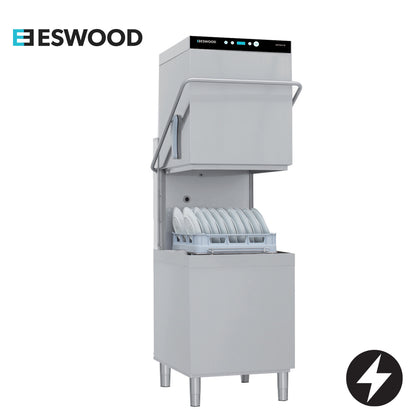
Popular picks: the Eswood Smartwash Pass-Through Dishwasher SW900X handles main-kitchen plate volume through the biggest sitting, and the Eswood SW500 Smartwash Undercounter Commercial Dishwasher covers serveries and smaller residential kitchens.
Every brand in the range is chosen for serviceability — planned maintenance matters more in aged care than any single feature, because a cold-chain failure is a clinical risk, not just a lost service. Spec equipment your maintenance contractor can support locally to ensure uptime and reduce risk across the kitchen.
Why buy from Commercial Kitchen Store
Free kerbside delivery
To metro SYD, MEL, BNE & ADL on eligible items only — plus free pickup at our Granville showroom.
Finance available
Spread the cost of your fit-out with SilverChef Rent-Try-Buy weekly payments.
Reviews & support
Genuine customer reviews on our product pages, plus warranty and service support after the sale.
Fitting out more than one space?
See all industries, or get a tailored fit-out quote from our team.